
We’re thrilled to announce that our latest research paper, “VISR-CNN: A Dual-Stream Framework for Meteorological Visibility Estimation via Multi-Scale Transmission Attention and Spectral Gating,” has been published in the prestigious MDPI Algorithms journal (May 2026). This breakthrough is another successful collaboration among Hong Kong Chu Hai College, City University of Hong Kong, and the Education University of Hong Kong:
- Wai Lun Lo, Kwok Wai Wong, Richard Tai Chiu Hsung, Henry Shu Hung Chung, Hong Fu, Harris Sik Ho Tsang, and Tony Yulin Zhu, “VISR-CNN: A Dual-Stream Framework for Meteorological Visibility Estimation via Multi-Scale Transmission Attention and Spectral Gating,” MDPI Algorithms, 19(6), 434, 2026, doi: 10.3390/a19060434.
Paper Link: https://www.mdpi.com/1999-4893/19/6/434
Abstract
Accurate meteorological visibility estimation is vital for transportation safety and environmental monitoring. However, modeling the inherent nonlinear spatial and spectral degradations in hazy environments remains challenging. While recent Large Vision-Language Models (LVLMs) offer strong scene understanding, they lack the regression precision required for visibility estimation. In this paper, we propose the Visibility-Aware Refined CNN (VISR-CNN), a dual-stream architecture that synthesizes local spatial cues with global frequency-domain signatures. The model integrates a Multi-Scale Transmission Attention (MSTA) module, which uses parallel dilated convolutions to estimate atmospheric transmission, and a Global Frequency Branch that utilizes 2D Real Fast Fourier Transforms (RFFT) with Spectral Gating to quantify visibility-dependent blurring. A progressive training strategy is introduced to decouple spectral and spatial optimization, and a physics-informed loss function is designed to supervise numerical regression while enforcing a monotonic ranking constraint consistent with physical light-attenuation laws. Results on the HKCHC-VD dataset show that VISR-CNN achieves state-of-the-art performance (MAE: 1.54 km; RMSE: 2.31 km), representing a 13.0% improvement over VisNet. Further evaluations on the CP1 and SWH datasets confirm robust generalization, reducing overall MAE by 21% and 20%, respectively, compared with the hybrid ResNeXt-50 + ViT model. Notably, in safety-critical range (0–10 km), VISR-CNN reduces RMSE for the HKCHC-VD, CP1, and SWH datasets by approximately 55%, 64%, and 71%, respectively, when compared with VisNet. These findings demonstrate the superiority of specialized, physics-grounded architectures over general-purpose LVLMs for high-precision meteorological regression.
The Research Team Members
Hong Kong Chu Hai College
- Wai Lun Lo, Professor and Head of the Department of Computer Science
- Kwok Wai Wong, Research Assistant in the Department of Computer Science
- Richard Tai Chiu Hsung, Associate Professor in the Department of Computer Science
- Harris Sik-Ho Tsang, Assistant Professor in the Department of Computer Science
- Tony Yulin Zhu, Assistant Professor in the Department of Computer Science
City University of Hong Kong
- Henry Shu Hung Chung, Chair Professor in the Department of Electrical Engineering
Education University of Hong Kong
- Hong FU, Associate Professor in the Department of Mathematics and Information Technology
Some Photos from the Paper
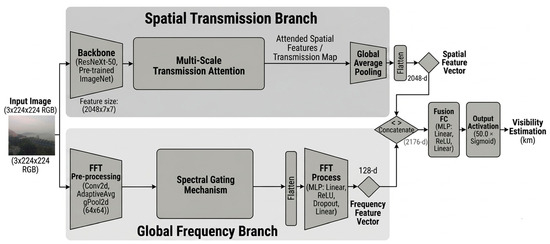
Figure 1. Progressive Training Architecture for Visibility Estimation.
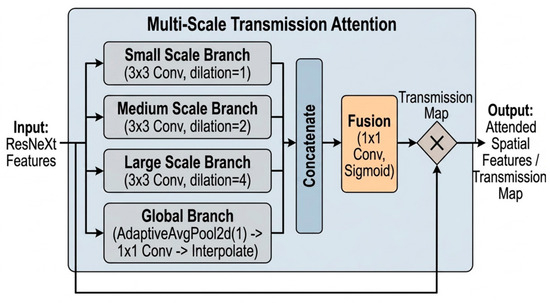
Figure 2. Multi-Scale Transmission Attention (MSTA) Module.